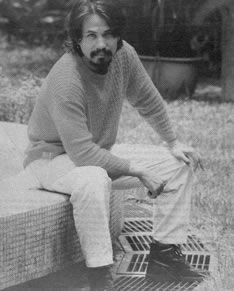
ANALITIC

Jumaat, April 04, 1997

M.Nasir Crossing UK 97

sumber : FB  Sahabat M Nasir & Youtube Luncai Emas

M.Nasir Crossing UK 97
SEMA Group Concert Hall
Royal Northern College of Music
Oxford Road Manchester, UK
2nd & 4th April 1997
8.00 pm
Tickets: £15.00 £20.00 £25.00

Vocal : M.Nasir
Guitar : Rafi Suhu
Bass : Jay Jay
Accordian/Harmonium : S.Atan
Gendang Melayu : Ramli Mohram
Seruling Melayu : Mohar Mohram II Mohar Mohram

Rajawali Terbang Tinggi


Apokalips


Keroncong untuk Ana

Selasa, April 01, 1997

WHO IS M.NASIR

taken from undated Galaxie magazine.
Steven Patrick
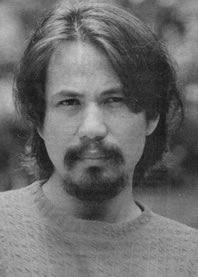
M. Nasir is on a musical voyage all of his own. In his ceaseless effots to create something uniquely Malay, he has repeatedly developed, progressed and married the elements of cultures both traditional and modern, Eastern and Western, to produce original music. As a songwriter, he acknowlade the west for providing rock and roll (especially wheh churning out the hits for acts as diverse as Search, Sudirman, Sharifah Aini and Wings) yet he manages to maintain an East-bent solo career. “Search and Wings were carriers,” says BMG Music's general manager Aziz Bakar, who signed Nasir in 1981, “but Nasir developed the sound.”

Nasir formed his first group Kembara in 1981, with A.Ali and S.Shahlan; both have since become prolific songwriter. Naslr himself had high ideals; he wished fon the band to attain “a religious level of existence”. ln the seven album that recorded, Kembara produced such literate pop-rock for lts time that it made the ever-increasing rock albums coming out then look vacuous. Look no further back thah to 1983's Generasi ku, which held the tracks Empat Penjuru (about a drug addict turned criminal and on road to rehab) and Kolar Biru (perceived as a statement for the working class). At a time when piracy was even more rampant than today, Kembara's album sales totalled close to 200,000.

After Kembara disbanded in 1986, Nasir begin carving his own career. His first album SOLO with the song Mustika and its hypnotic use of the gamelan, established him as a musical force. He reached his climax in 1993 with the release of his best selling album to date (more than 120,000 sold) and won two A.I.M. awards for best traditional album and best song (Mentera Semerah Padi). “Anyone who can break the mold and come up with something different will ultimately succeed” says Aziz Bakar.

As demand for his music grew, Nasir formed Luncai Emas in 1989, a song publishing house that now has over 1000 compositions. ln 1993, he launched his own label Mendonan, which today has three solo artistes - Ruby, Meor and Joey (the only act with an album). Nasir ,39, also maintains an active role in films, as both actor and director. His body of work includes Kembara Seniman Jalanan, Fenomena, Selubung, Simfoni Duniaku and Balada.

As he recovers from the recent “Who is Mahathir?” brouhaha and prepares for his latest directorial project Merah - with pop star turned actors Awie and Ziana Zain -nto hit the circuit, Nasir seems in good spirits. At his recording studio in Sungai Buloh, Kuala Lumpur, he's dressed casually in a black shirt and blue jeans, he drinks his coffee from a Japanese porcelain glass, and his answers are short but always sure.

What is your favourites Kembara album?
I don't know. On the first album, we wanted to try something with harmonies. On the second album we tried too hard to impress. On the third album, I was into progressive music but still rock based. All the albums were about change. The album were the same but at the same time, they were not the same.

What was popular at the time.?
Rock. Heavy Metal music. Lots of band were playing Deep Purple.

How did Kembara stand out?
I listened to all sort of music. I listened to stuff that people didn't buy, like music by Bob Dylan. I listened to the lyrics. Kembara was quite lyrics based.

Did Malay music have an identity then?
The modern stuff was all copied. We approached music the Western way. I've been trying to write my own way (since then) but the market is such.

Has Malay music reached a certain standad yet?
The reason why we're not up to standard yet is because of our lack of knowledge in the arts. A lgt of people jumped into this business for the cari makan thing, or fame.

Who do you look up to as a lyricist?
Nobody writes like me. Mainly because certain types of lyrical thames only appeal to certain music.

Did poetry influence you?
I don't read poetry a lot. It is more the love of language that has influencend me.

Your song, Mustika has been described as “music for Malay archipelago”. What is your understanding of it?
Nusantara was what was there before the coming of any outside influences. The music was very simple. Gradually the outsiders came and the music evolved and it became uniquely Southeast Asian - asli, gamelan, and other indigenous music. But it is diffcult to develop these types of music into something big. It's not like Indian music, which has already been developed and has reached a certain height.

When did the traditional element come into your music?
Ever since day one. It's quite distinct in a Kembara song called Express Rakyat. Some artistes use ethnic elements to make an elite style of music. I'm trying to reach the man on the street. I'm using a style that for them, is complex.
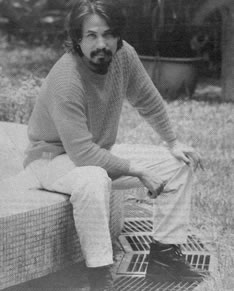

Your music has sometimes been described as world music.
There is no other kind of name, so they call it world music.

Did you think the merging of traditional and modern music would catch on?
When I began, I had no real commitment. I just wanted to enjoy what i did.

Does rock music have the same impact on you now as when you first started?
No. I've been listening to distortion for 15 years. I don't enjoy it anymore. I spend very little time listening to music.

Does rock music work in Malay?
The problem with rock music is that it is so synonymous with the English language. The whole world is Americanized, there are no authentic Asians. We just love Hollywood. We hate our own faces. Asians think movies are the real thing.

In music, it’s the same thing. In your country, you may be a hero. But outside, people laugh at you. For instance, Loudness (a japanese rock band) play very well but people outside don’t listen to them. It’s not natural to see Asian performing rock. It sounds weird. The languages doesn’t seem to suit to it. The language is the problems. Most Asian artist aren’t really into languages, which is different from rock artistes in the West. They are college people into poetry and thing like that.

Is there any longevity in Malay rock?
Malay rock fans move on eventually. They get married, turn to religion, and stop buying records. From artiste’s point of view, rock music is for your youth not your career.

What are the criticisms often levelled at you?
I’m normally considered trouble.

Do you suffer for your art?
Sure, I suffer, but I enjoy it also. The main problem is that the final product is not always the same as the idea I started with.

Some songwriters say the great song come from great suffering.
Like Kurt Corbain? To a certain extent it is true.

How do you feel about being Malaysia Bob Dylan?
No comment.

Do you write in a different state of mind when writting for other artistes?
Yes, I always think of the market.

In your solo work, do you let your self go completely?
About 80 percent.

Any big hit that you're proud of?
I don't know. I just do it.

Which artiste do you connect most with in the studio?
It's hard to say.

Canggung Mendonan was considered a pinnacle of your work. Was it a realization of some sort.
Are they saying that I should retire? When I was writing it, I was just enjoying myself and it turned out to be successful.

Do you feel you have a lot to live up to for your next album?
That's why I'm going to travet around Asia and record.

You're considered a self-contained musician. How do you feel about the collaborative process?
I like to work with people who are open minded, who know culture. There are a very few of them, so it's hard to collaborate. I'm not doing traditional music. It's a modern form but it has its ideas rooted in traditional music. I was trained as a fine art student. People can't really identify with me.

What specification did you want to do after your fine art degree?
I wanted artistic value in everything I did. People can make something for sake of society, but if it has no taste or artistic value, it has no worth to me. I was so obsessed with this renaissance thing when i was young. I'm still trying to figure it out.

How do you feel about Merah, your directorial debut?
It's O.K. It's a raw film. I wanted to make alternative film.

Awie play dark anti hero character. How do you bring that out?
That's me inside Awie. There's also Awie inside; he was a pretty bad kid when he was growing up.

Describe your role as director.
I brought everybody down to earth.

It's been rumoured that there was one scene that was censored, involving ducks?
The ducks were mating, you know.

Ahad, Mac 30, 1997

M Nasir tempelak juruhebah radio

petikan Bintang Popular, Berita Minggu 10 Februari 2008
oleh Hardi Effendi Yaacob

Selepas kontroversi dengan kenyataan 'Siapa Mahathir?' yang merujuk kepada mantan Perdana Menteri, Tun Dr Mahathir Mohamed, M Nasir terus mencetuskan kontroversi dengan mendakwa juruhebah radio perlu dibayar untuk memutarkan lagu seseorang artis.

Berita Harian pada Mac 1997 melaporkan karyawan muzik itu dengan lancang mendakwa syarikat rakaman terpaksa 'memberi makan' kepada orang tertentu di stesen radio supaya lagu mereka boleh disiarkan. Kenyataan itu dibuat ketika Nasir menjadi saiah seorang ahli panel di seminar muzik berjudul Media dan Industri Muzik sempena Minggu Muzik Malaysia.

Akibat kenyataan itu, Juruhebah Kanan Radio 1, Ainul Jamal Zainal yang bertindak mewakili rakan setugas menyifatkan komposer itu bermulut celupar dan bagaikan hendak mencari pasal dengan stesen radio. Menurutnya, dakwaan itu seolah olah hendak memalukan semua juruhebah radio sekali gus merendahkan martabat mereka yang terbabit dalam tugas ini.

Menteri Penerangan ketika itu, Datuk Seri Mohamed Rahmat (kini Tan Sri), berkata M Nasir akan menerima padah jika tidak memberikan penjelasan secara rasmi kepada Kementerian Penerangan berhubung dakwaannya.

Beliau berkata, dakwaan itu dianggap serius kerana mengeluarkan kenyataan secara terbuka iaitu pada satu seminar rasmi dan ini bukan pertama kali komposer itu bermulut celupar dan mencari pasal dengan RTM.

"Sama ada suka atau tidak, dia (M Nasir) perlu beri penjelasan atau laporan secara rasmi kepada kita. Saya menganggap dakwaannya itu serius dan berat. Saya juga perlu memelihara maruah kakitangan saya. Kalau laporan dia betul, kita boleh mengenakan tindakan tatatertib terhadap kakitangan terbabit. Tapi kalau laporan itu tidak betul, dia kena sedia menerima padahnya," katanya.

Pada masa sama, pihak media memaparkan terhadap apa yang disebut budaya payola, iaitu suatu kegiatan syarikat rakaman membayar dan memberi ganjaran tertentu kepada juruhebah untuk membolehkan lagu mereka mendapat perhatian dan kerap disiarkan. Payola dikatakan mula wujud di Amerika Syarikat dan ada pandangan mengatakan ia tidak mustahil boleh berlaku di mana saja, termasuk negara ini.

nota kaki: Petikan asal dari tahun 1997 berkenaan insiden ini tiada dalam simpanan, jadi petikan dari tahun 2008 ini sebagai gantinya.

Rabu, Januari 15, 1997

Konsert M. Nasir di Eropah April depan

petikan Berita Harian 15 Januari 1997
Oleh Hanim Mohd Saleh

PENYANYI M.Nasir menjadikan tahun baru 1997 sebagai permulaannya keluar dari rantau ini.

Beliau untuk pertama kali akan mengadakan konsert di Eropah. Pengarah Urusan Luncai Emas Sdn Bhd, Junainah Johari, memberitahu pihaknya sedang membuat persiapan untuk konsert M.Nasir di Manchester April depan.

"Kami sedang mengaturkan pesta tiga hari di Manchester dengan konsert unplugged Nasir menjadi acara kemuncaknya. Konsert itu akan diadakan selama dua malam.

“Dalam tempoh tiga hari di Manchester kami akan mengadakan majlis dialog dan apresiasi lagu-lagu Nasir dengan para pelajar Melayu yang sedang menuntut di sana” kata Junainah yang juga adalah isteri Nasir ketika ditemui Berita Harian baru-baru ini.

Idea mengadakan acara di Manchester itu kata Juninah lagi tercetus melalui seorang anggota Kelab Sahabat Kelab Peminat Nasir yang sedang belajar di Eropah.

“Melalui anggota kami di luar negeri itulah, kami mendapat maklum balas yang mereka sangat merindui persembahan Nasir. “Oleh itu, kami  memutuskan untuk menganjurkan konsert itu dan telah melantik salah seorang daripada mereka untuk menyelaraskan konsert Nasir di sana.

“Selain konsert, kami akan juga mengadakan sesi dialog dengan para peminat untuk membincangkan perkembangan lagu-lagu dengan Nasir agar kunjungan Nasir ke sang lebih bermakna kepada mereka yang mengenalinya.” Tambah Junainah lagi.

Filem Merah Akan Dijadikan Komik

Petikan Berita Harian 15 Januari 1997
Oleh Hanim Mohd Saleh

Pelancaran bakal dibuat selepas Hari Raya Puasa

SETELAH berjaya mencapai kutipan lebih RM1.5 juta (RM850,000)  filem Merah akan menemui peminatnya menerusi komik pula. Pengarah Urusan Luncai Emas yang menerbitkan filem itu, Junainah Johari. berkata komik setebal 80 muka surat itu akan dilancarkan selepas Hari Raya nanti.

Ilustrasi watak dan latar belakang Merah dibuat oleh pelukis bebas yang menyiapkan poster “Merah” Mohd Fuad. 

“Kami memang telah merancang mengeluarkan komik filem Merah jauh sebelum filem itu ditayangkan. Memang ada cadangan agar kami menghasilkan novel seperti Yusof Haslam mengeluarkan novel Maria Mariana tetapi kami memilih komik kerana ia lebih mudah dibaca dan berwarna warni. 

Secara kebetulan, kami sudah mempunyai pelukis ilustrasi yang berbakat untuk menguruskan komik ini, kata Junaidah.  

Selain cerita penuh filem, komik Merah juga menjawab beberapa persoalan yang timbul daripada kisah  di Іayar pеrаk.

Mengulas mengenai sambutan filem Merah yang sejak Disember lalu ditayangkan di pawagam-pawagam Malaysia dan Singapura, Junainah berkata pihaknya tidak menaruh harapan yang tinggi terhadap hasil kutipan filem itu.

"Kalau sudah melebihi RM 1 juta, kami rasa sudah merupakan satu pencapaian yang baik kerana selain filem Yusof Haslam “Maria Mariana tahun lalu, filem filem Malaysia yang lain gagal mencapai sebanyak itu, kata Junainah.

Kami akan menghasilkan filem kedua, tetapi bukan dalam tempoh yang terlalu cepat. Mungkin tahun depan. tambahnya.

Sabtu, Julai 06, 1996

Isnin, Julai 01, 1996

Don't ask, don't tell

by Steven Patrick and Lennard Gui
taken from undated Galaxie magazines

The answer is the Prime Minister of Malaysia. For everything you own, don't asked the question. Unfortunely, M.Nasir allegedly dld and the Ministry of Information replied by blacklisting his entire life's work for 14 day before lifting the ban on July 1.

Did Nasir's tongue slip or was the reporter making it up? Utusan Malaysia stands by its claim that Nasir really ask “Siapa Mahathir?” The ministry's deputy Sulaiman Mohamed said it wasn't necessary to talk to Nasir about his remark (before slapping the ban) as “he would probably deny it”

Nasir had apparently responded rather flippantly when the organisers of Malam Puisi Utusan Malaysia asked that he be pantual for rehearsals because the P.M. would be attending the recital. To make matters worse, Nasir failed to show up at the event on May 4, prompting the paper to accuse him of being disrespectful.

On Jun 17, the Information Ministry acted on the “authenticity and credibility of the newspapers” and imposed the ban without giving Nasir a hearing. Certain quarters jumped on the bandwagon and even questioned the Singapore-born entertainer's status as a permanent resident of Malaysia.

A little too late, Nasir finally decided to do damage control. “Dr. Mahathir was never mentioned (in my conversation)” he stated, and added that he could not make the recital because he had to be at the funeral of his father-in-law.

As to why Nasir waited so long to address the matter, BMG Music general manager Aziz Bakar said that making the immediate response would have only added fuel to the fire.

Because the blacklist covered not only Nasir's movies and own recordings, but performances of his songs by other artistes, the industry responded...by sitting on the fance -- wanting to support Nasir, a songwriting force, but not wanting to incur the wrath of the Information Ministry either. “lt's not just what we were losing on royalties,” says Aziz Bakar, “It's artistic quality we were worried about too”

When Nasir ban made the international news, Information Minister Mohamed Rahmat put a spin on the matter and ordered the investigation. The ministry's secretary general, Datuk Zawawi Mahmudin, said thqt during the inquiry, both Nasir and the reporter maintained their version of the story and made it “difficult for us to decide who was right.”

On July 1, the ban was finally lifted “in the interest of other artistes who are involved in the works of M.Nasir.” (Nasir is currently in Hong Kong working on his directorial debut, Merah, starring Ziana Zain and Awie. He also composing the soundtrack for the movie and writing songs for Awie second album.

Naturally, industry players are relieved that the mess is over but are still exercising caution. “We will leave it up to our artistes if they want to work with Nasir.” say EMI marketing director Calvin Wong.

“We are not about to discourage our artistes from working with him” concurs EMI local artiste and repertoire Mohd Arzmy. “The controversy will die down”

Selasa, Jun 25, 1996

UTUSAN DIMINTA BERI PENJELASAN

 petikan BERNAMA 25 Jun 1996

 PETALING JAYA, 25 Jun (Bernama) -- Kementerian Penerangan hari ini meminta Kumpulan Utusan memberi penjelasan berhubung isu penyanyi M. Nasir yang dilaporkan menghina Perdana Menteri Datuk Seri Dr Mahathir Mohamad dengan ungkapan "Siapa Mahathir".

 Menteri Penerangan, Datuk Mohamed Rahmat berkata penjelasan daripada Kumpulan Utusan penting bagi membolehkan beliau membuat keputusan muktamad secepat mungkin mengenai kedudukan M. Nasir yang karyanya telah dilarang daripada disiarkan oleh semua media elektronik dan cetak.

 "Bagi menjamin keadilan, kita perlu memanggil Kumpulan Utusan untuk memberi penjelasan kerana isu ini berpunca daripada laporan akhbar Utusan.

Kita mahu mereka memberi keterangan dan mengemukakan bukti dalam sehari dua ini," katanya kepada pemberita di sini selepas menyaksikan majlis menandatangani perjanjian yang membuka laluan ke arah penubuhan "Channel Ten", sebuah syarikat penerbitan video dalaman.

 Semalam, M. Nasir hadir di Angkasapuri untuk memberi keterangan kepada Ketua Setiausaha Kementerian Penerangan, Datuk Zawawi Mahmuddin, berhubung isu itu.

 Larangan penyiaran semua karya M. Nasir diumumkan Timbalan Menteri Penerangan, Datuk Suleiman Mohamad, pada 16 Jun lepas selepas penyanyi itu dilaporkan oleh Utusan sebagai bertanya "Siapa Mahathir" ketika diminta menghadiri latihan pembacaan puisi sempena Malam Puisi Utusan yang turut dihadiri Dr Mahathir baru-baru ini.

 Mohamed berkata, Zawawi belum memaklumkan kepadanya mengenai penjelasan M. Nasir itu.

 Katanya, tindakan terhadap M. Nasir diambil semasa beliau berada di luar negara kerana bercuti dan adalah wajar keputusan selanjutnya hanya boleh dibuat selepas semua pihak diberi peluang memberi keterangan.

 Terdahulu, Mohamed berkata penubuhan "Channel Ten" memberi satu lagi saluran pilihan bagi pengusaha hotel di negara ini selain perkhidmatan "Vision Four".

 Katanya, kerajaan tidak bercadang untuk mengeluarkan lesen lain bagi perkhidmatan seperti itu.

 Beliau mengingatkan "Channel Ten" dan "Vision Four" supaya mematuhi segala peraturan yang ditetapkan jika mahu kekal dalam perniagaan mereka.

 "Channel Ten", syarikat usahasama Cape Elegance Sdn Bhd (CAPE) dari Malaysia dan IPC Interactive Pte Ltd (IPCi) dari Singapura, akan menyediakan saluran berbentuk maklumat dan hiburan atau "Infotainment" kepada hotel, lapangan terbang, stesen Transit Aliran Ringan (LRT), hentian bas dan apartmen sewaan.

 Ketua Eksekutif CAPE, Azlina Aziz berkata, syarikat itu sedang berbincang dengan Lembaga Penggalakan Pelancongan dan kerajaan-kerajaan negeri dalam usaha menyediakan program dokumentari kepada penonton "Channel Ten" di samping program lain. -- BERNAMA